Online Sexologist & Infertility Consultation in Tirur
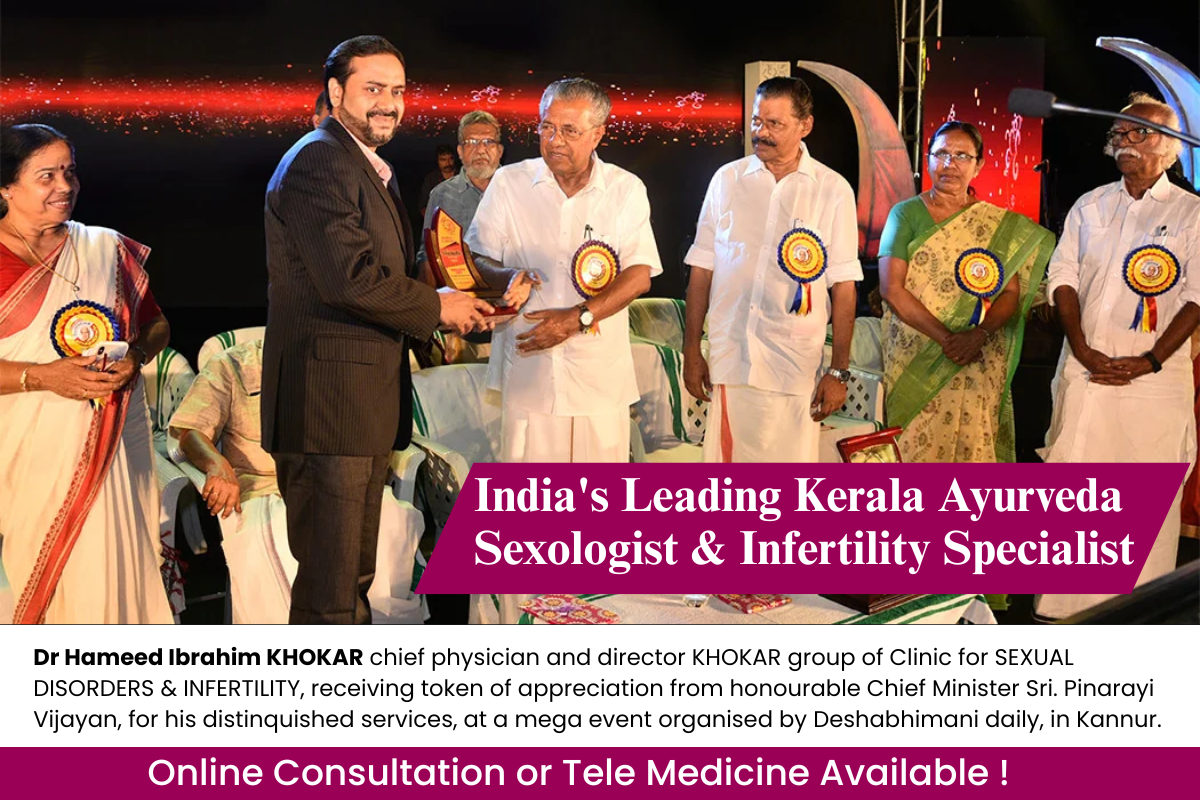
Dr Hameed Ibrahim KHOKAR chief physician and director KHOKAR group of Clinic for SEXUAL DISORDERS & INFERTILITY, receiving token of appreciation from honourable Chief Minister Sri. Pinarayi Vijayan, for his distinquished services, at a mega event organised by Deshabhimani daily, in Kannur.
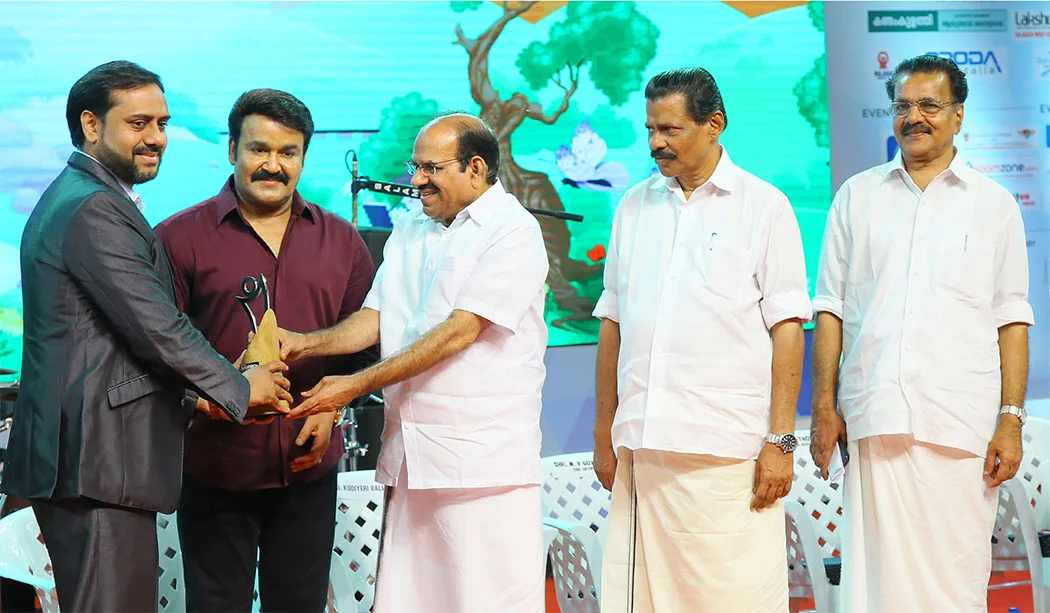
Dr Hameed Ibrahim KHOKAR chief physician and director KHOKAR group of Clinic for SEXUAL DISORDERS & INFERTILITY, receiving token of appreciation from CPM Kerala State Secretary Sri. Kodiyeri Balakrishnan in the presence of Malayalam film superstar Padmasri Mohanlal, for his distinquished services, at a mega event organised by Deshabhimani daily, in Thrissur.
SPECIALITY AYURVEDA TREATMENT
150 YEARS OF AYURVEDA LEGACY
PATIENTS FROM OVER 45 COUNTRIES
MEDICINES DELIVERED WORLDWIDE
Tirur, with its strong Gulf-connected families, business community, and evolving lifestyle patterns, reflects a growing trend of delayed conception and stress-related sexual health concerns. Travel-based employment, dietary changes, irregular sleep, and metabolic imbalance often influence reproductive hormones over time.
Online consultation provides couples in Tirur access to structured fertility evaluation without fragmented opinions or social hesitation.
What Couples in Tirur Frequently Face
Conception delayed after years abroad
Erectile instability linked to stress and fatigue
Low sperm motility despite acceptable count
PCOS with insulin resistance
Recurrent early pregnancy loss without luteal mapping
Subclinical thyroid imbalance affecting ovulation
Often, fertility challenges arise from layered hormonal and lifestyle factors.
Case Study – Azoospermia with Hormonal Pattern
A 38-year-old male from Tirur consulted after being advised to consider invasive sperm retrieval.
Diagnostic Snapshot
Two semen reports: Azoospermia
FSH: Moderately elevated
Testosterone: Within lower-normal range
Testicular volume: Slightly reduced
No prior structured hormonal correction
Why This Pattern Requires Careful Interpretation
Azoospermia can be:
Obstructive
Non-obstructive
Hormone-mediated suppression
In this case, hormonal imbalance suggested partial spermatogenic suppression rather than complete failure.