

What Is Male Infertility?
Male infertility refers to difficulty in achieving pregnancy due to issues in sperm production, sperm quality, ejaculation, or reproductive organ function. It affects a significant proportion of couples worldwide and often remains undiagnosed until a fertility evaluation is done.
Key contributors include:
- Low sperm count
- Poor motility or abnormal morphology
- Obstruction in sperm transport
- Hormonal imbalances (FSH, LH, testosterone dysregulation)
- Varicocele
- Lifestyle and metabolic issues such as obesity, chronic stress, high inflammation
- Environmental and toxin exposure
Male infertility is not a disease but a symptom of deeper systemic disturbances. Proper evaluation (semen analysis, hormonal profile, ultrasound, metabolic markers) helps identify the root imbalance.
AYURVEDIC PERSPECTIVE ON MALE INFERTILITY
Ayurveda views male infertility through the lens of Shukra Dhatu Dushti, disturbances in Vata–Pitta–Kapha balance, and impairment of Agni and Ojas. The reproductive system is deeply interconnected with digestion, metabolism, circulation and emotional wellbeing.
a) Nidāna (Ayurvedic Causative Factors)
Male infertility aligns with:
- Shukra-vaha Srotas Dushti : Disturbance or obstruction of reproductive channels due to excessive heat, stagnation, or weakness.
- Vata–Pitta Pradhāna Doṣa Dusti
- Pitta Aggravation: excessive heat around reproductive organs, inflammation, reduction in sperm quality
- Vata Aggravation: impaired movement of reproductive elements, premature ejaculation, low motility
- Kapha weakness: reduced nourishing capacity affecting semen volume and density
- Mandagni (Weak Metabolism) : Poor nutrient conversion → weak Shukra Dhatu → low vitality.
- Ojas Kṣaya (Vital Strength Depletion) : Stress, overwork, excessive sexual strain weaken reproductive potential.
- Avarana (Obstruction of Channels) : Circulatory stagnation or heat retention affecting testicular function.
b) Saṃprāpti (Ayurvedic Pathogenesis)
- Doṣa imbalance (usually Vata–Pitta dominant) begins.
- Agni weakens, leading to poor tissue nourishment.
- Pitta heat disturbs spermatogenesis → affects count, motility and morphology.
- Vata derangement disturbs movement and maturation of sperm cells.
- Kapha depletion reduces volume and stability of seminal fluid.
- Shukra Dhatu becomes undernourished → poor sperm parameters.
- Ojas depletion reduces reproductive resilience and mental–sexual vitality.
Ayurveda therefore focuses on Vata–Pitta balance, Shukra Dhatu rejuvenation, Agni regulation, circulatory support and Ojas restoration.
AYURVEDIC TREATMENT APPROACH FOR MALE INFERTILITY
Ayurvedic treatment supports male fertility by strengthening Shukra Dhatu, improving circulation, reducing heat and oxidative stress, and restoring Ojas. This complements modern evaluation and supports long-term reproductive potential.
1. Shukra-Nourishing Herbs (Supportive Role)
(These do NOT replace modern evaluation; they support tissue vitality.)
- Ashwagandha (Withania somnifera) – Enhances Shukra Dhatu, supports testosterone balance, reduces stress-induced infertility.
- Shatavari (Asparagus racemosus) – Strengthens reproductive nourishment and cools Pitta heat.
- Kapikacchu (Mucuna pruriens) – Supports sperm count, motility and dopamine-linked sexual vitality.
- Gokshura (Tribulus terrestris) – Improves reproductive tone and supports urinary–reproductive synergy.
- Safed Musli (Chlorophytum borivilianum) – Potent Shukra Rasayana supporting semen quality and vitality.
- Amalaki (Emblica officinalis) – Reduces oxidative stress affecting sperm morphology.
- Shilajit (Purified) – Supports energy, tissue regeneration and reproductive endurance.
- Yashtimadhu (Glycyrrhiza glabra) – Improves mucosal health and cools Pitta irritation.
2. Classical Formulations (Used Based on Individual Assessment)
(Supportive — not one-size-fits-all)
- Ashwagandhadi Lehyam – Deep Shukra Dhatu nourishment.
- Chandraprabha Vati – Balances Vata–Pitta and supports genitourinary health.
- Shilajit Vati – Promotes energy and vitality.
- Sukumara Ghritam – Supports Vata stabilisation and digestive strength.
- Narasimha Rasayanam – Rejuvenative support for reproductive tissues.
- Gokshuradi Guggulu – Useful when urinary or circulatory stagnation is present.
- Brahma Rasayanam – Supports stress management and Ojas rebuilding.
3. Panchakarma & Detox (Only When Appropriate)
Not for all cases; used selectively.
- Virechana – Reduces excess Pitta heat affecting sperm formation.
- Basti Therapy – Strengthens Vata balance, circulation and reproductive nourishment.
- Abhyanga + Swedana – Improves circulation and reduces oxidative stress.
4. Lifestyle, Diet & Mind–Body Support
Ayurveda views fertility as an extension of overall health. Small daily changes often produce profound improvements.
Diet Guidelines
Supportive:
- Warm, freshly cooked meals
- Healthy fats (ghee, nuts, seeds) to nourish Shukra Dhatu
- Milk-based preparations where suitable
- Fruits like pomegranate and dates
To minimise:
- Excess heat-producing foods
- Highly processed items
- Late-night heavy meals
- Repeated fasting or erratic eating patterns
Lifestyle Advice
- Maintain regular sleep cycles
- Avoid excessive heat exposure to the testicular area
- Moderate exercise to improve circulation
- Reduce screen time, especially at night
- Manage stress through breathing practices and meditation
- Maintain healthy sexual habits without over-exertion
These practices help stabilise the reproductive axis and support hormonal balance
5. Follow-Up
Every 4–6 weeks, assessing:
- sperm count, motility, morphology
- energy and Ojas
- digestion and metabolism
- stress and sleep quality
SAFETY NOTE
Ayurvedic herbs and formulations support reproductive health but do not replace medical evaluation, semen analysis, or treatment of underlying conditions like varicocele, infections or hormonal disorders. Treatment is always individualised.
Why Patients Trust Our Clinic for Male Infertility
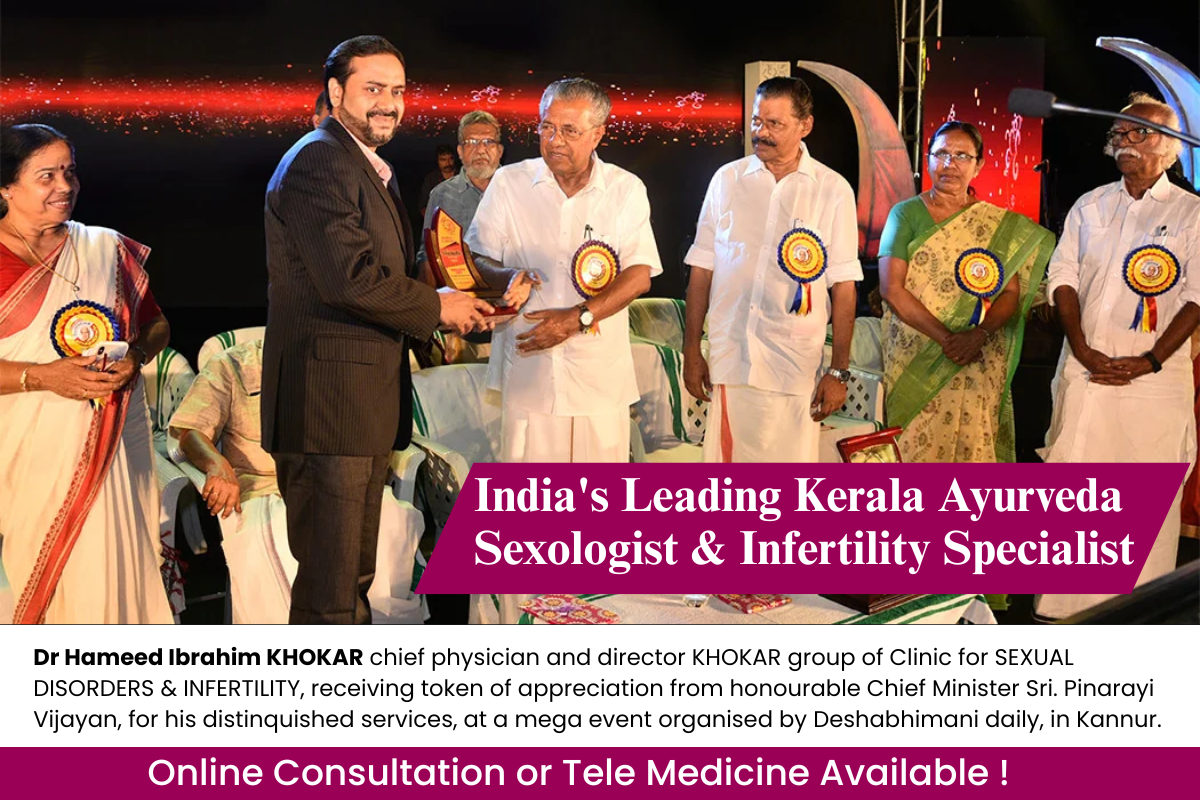
- Care led by an DR HAMEED IBRAHIM KHOKAR Ayurveda Sexologist with extensive experience in male fertility.
- Backed by a 150+ year Kerala Ayurveda family legacy focused on holistic reproductive healing.
- Patients from 40+ countries seek guidance for complex infertility cases.
- Blending classical Ayurveda with insights from modern reproductive science.
- Authentic herbal formulations prepared without steroids, hormones, or harmful chemicals.
- Treatment philosophy centred on root-cause correction, not quick symptomatic relief.
Case Example
A 34-year-old male presented with low sperm count, reduced motility, high stress levels, irregular sleep, and borderline metabolic markers. Semen analysis showed 8 million/mL concentration and 10% motility.
Ayurvedic Assessment
- Vata–Pitta imbalance
- Weak digestion
- High mental strain affecting reproductive vitality
- Early signs of Shukra Dhatu depletion
Treatment Approach
- Gentle metabolic correction
- Rasayana protocol tailored to stress-related reproductive depletion
- Dietary adjustments with improved sleep hygiene
- Rejuvenative herbal formulations over 12 weeks
Outcome
At 12 weeks, semen analysis showed notable improvement in motility and vitality, count reached 35 million with 40% progressive motility and 53% normal morphology with better energy levels and reduced stress.
Disclaimer
The information provided on this page is for educational purposes and does not replace a personalised medical consultation. Ayurveda treatments are planned only after evaluating an individual’s health status, clinical history and specific imbalances. Results vary from person to person. For accurate diagnosis and appropriate treatment, please consult a qualified healthcare professional.
AYURVEDIC TREATMENT FOR MALE INFERTILITY- FAQ
Can male infertility be reversed with Ayurveda?
In many cases, fertility improves significantly when metabolic, hormonal, and tissue-level imbalances are corrected. Ayurveda focuses on long-term systemic strengthening rather than temporary results. Outcomes vary depending on underlying causes.
How long does Ayurvedic treatment for male infertility take?
Meaningful changes in semen parameters typically require at least one spermatogenesis cycle (10–12 weeks), though timelines vary based on individual health and severity of imbalance.
Do I need to stop allopathic medicines?
Not necessarily. Many patients continue necessary medications. Treatment is integrated carefully to avoid interactions.
Is Panchakarma mandatory for male infertility?
No. It is recommended only in selected cases where cleansing is essential for improving metabolic efficiency or reducing inflammation.
Can Ayurveda help if sperm count is extremely low?
Ayurvedic therapy focuses on supporting tissue regeneration, hormonal stability, and improving the environment for sperm production. Even in low-count cases, improvements are often possible depending on the root cause.
Does stress affect sperm quality?
Yes. Chronic stress can impact hormones, libido, sleep, and overall reproductive function. Several Ayurvedic interventions address this dimension.
Are herbal medicines safe for long-term use?
When prescribed by a qualified practitioner, authentic Ayurvedic formulations are safe and free from harmful additives.
Can obesity or metabolic issues cause infertility?
Yes. Insulin resistance, inflammation, and hormonal dysregulation can significantly impair sperm health. Treatment plans often include metabolic correction.
Does sexual frequency influence sperm quality?
Do dietary changes really help?
Yes. Foods that nourish Shukra Dhatu, improve digestion, and stabilise energy contribute meaningfully to fertility outcomes.
Can Ayurveda help with hormone-related infertility?
Ayurvedic treatment supports natural hormonal balance via metabolic correction, stress regulation, and tissue rejuvenation.
Is male infertility always permanent?
No. Many cases show significant improvement with proper evaluation, lifestyle support and targeted therapy.