
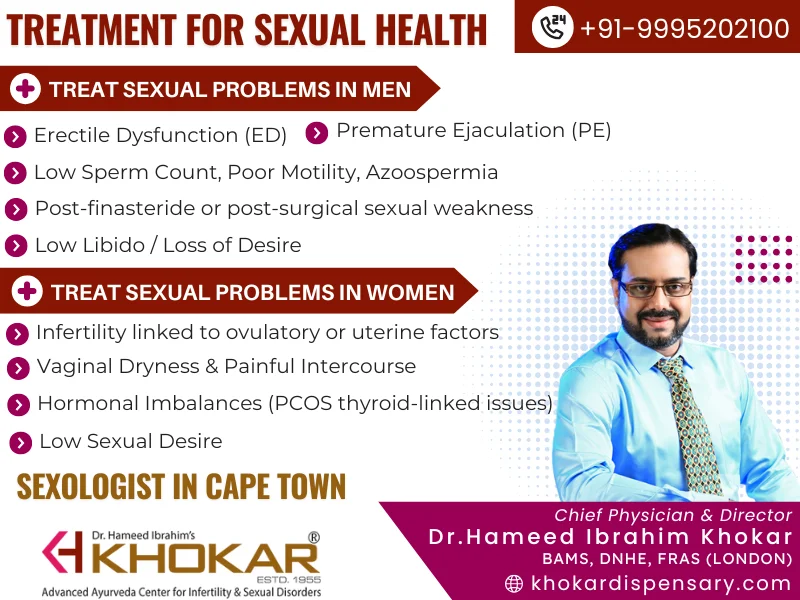



Cape Town is one of South Africa’s most dynamic cities, known for its fast-paced professional environment, diverse population, and evolving lifestyle patterns. While many individuals focus on career growth, family responsibilities, and personal wellbeing, concerns related to sexual health and fertility are often left unspoken.
Both men and women may experience reproductive health challenges such as male infertility, female infertility, erectile dysfunction, premature ejaculation, reduced libido, hormonal imbalance, or difficulty conceiving. Because these topics can feel sensitive or private, many couples delay seeking medical guidance until the issue begins affecting their relationship or family planning goals.
Through online sexologist consultation in Cape Town, individuals and couples can discuss sexual and fertility concerns confidentially with a specialist and receive personalised treatment guidance without the need to travel internationally.
Sexual and Fertility Concerns That Often Require Medical Attention
Sexual health and reproductive difficulties can arise due to a combination of physical, hormonal, emotional, or lifestyle-related factors. When symptoms persist for several months, a professional evaluation can help identify the underlying causes.
Common concerns among patients include:
- Erectile dysfunction or difficulty maintaining erection
- Premature ejaculation affecting intimacy
- Low sperm count or poor sperm motility
- Male infertility despite normal sexual function
- Irregular ovulation or hormonal imbalance in women
- Difficulty conceiving after years of marriage
- Reduced libido in men or women
- Stress-related sexual dysfunction
Identifying the root cause is essential before beginning any treatment.
Lifestyle Patterns Influencing Sexual and Fertility Health
Cape Town’s coastal lifestyle and urban work culture can influence reproductive health in several ways. Many professionals manage demanding work schedules, long commuting times, and high stress environments, which may gradually affect hormonal balance and overall vitality.
Patients consulting from Cape Town often report factors such as irregular sleep cycles, sedentary work routines, smoking, alcohol consumption, and inconsistent meal timing contributing to fatigue and reduced sexual stamina.
In addition, fluctuating work schedules and stress may influence hormonal rhythms in both men and women, potentially affecting fertility and sexual wellbeing. Addressing these lifestyle patterns alongside medical treatment can play an important role in restoring reproductive health.
Reproductive Health Trends Observed Among Couples
Increasing awareness about fertility testing has encouraged many couples in Cape Town to seek evaluation when pregnancy is delayed. In many cases, fertility challenges may involve both male and female factors rather than a single cause.
Men may experience reduced sperm motility, erectile instability, or stress-related sexual dysfunction, while women may face ovulatory disturbances, hormonal imbalance, or reproductive health concerns affecting conception.
Couples consulting from Cape Town frequently mention demanding work schedules, lifestyle stress, and fatigue as contributing factors influencing their reproductive health. Understanding these patterns helps guide a more personalised and holistic treatment approach.
Ayurvedic Perspective on Sexual Vitality and Fertility
According to Ayurveda, reproductive health depends on the proper nourishment of Shukra Dhatu in men and Artava Dhatu in women. These reproductive tissues develop through multiple stages of metabolism, which means disturbances in digestion, hormonal balance, stress regulation, or systemic health can eventually affect fertility and sexual function.
When these physiological systems become imbalanced, symptoms such as reduced sperm quality, erectile dysfunction, premature ejaculation, hormonal irregularities, reduced libido, or difficulty conceiving may appear.
Ayurvedic treatment focuses on restoring internal physiological balance and strengthening the biological systems responsible for reproductive vitality.
Personalised Ayurvedic Treatment Approach
Each patient or couple receives a customised treatment plan after careful evaluation of:
- Sexual and reproductive health concerns
- Medical and fertility history
- Lifestyle habits and stress levels
- Laboratory reports such as semen analysis or hormone profiles if available
Treatment strategies generally aim to:
- Improve sperm production and semen quality
- Support healthy ovulation and hormonal balance
- Enhance sexual vitality and stamina
- Nourish reproductive tissues in both men and women
- Reduce stress-related reproductive dysfunction
- Improve overall physical and metabolic health
This approach focuses on sustainable improvement rather than temporary symptomatic relief.
Authentic Kerala Ayurvedic Herbal Formulations
Treatment uses traditional Kerala Ayurvedic formulations prepared from carefully selected herbal ingredients known for supporting reproductive health and systemic vitality.
These herbal medicines aim to improve hormonal balance, reproductive tissue nourishment, and overall physical strength while remaining suitable for supervised long-term use.
Rather than acting as temporary stimulants, Ayurvedic therapy focuses on improving the internal physiological environment necessary for healthy fertility and sexual wellbeing.
Online Consultation Process for Patients in Cape Town
Individuals and couples in Cape Town can consult through a confidential online medical appointment.
The consultation process generally includes:
- Detailed discussion of symptoms and health history
- Review of medical reports such as semen analysis or hormone tests if available
- Clinical assessment of sexual and reproductive health factors
- Personalised treatment planning
- Preparation and international shipment of medicines
This allows patients to receive specialised medical guidance while maintaining privacy and convenience.
Medicine Delivery to Cape Town
After consultation, prescribed medicines are carefully packaged and shipped internationally. Patients receive clear instructions regarding dosage, dietary guidance, and lifestyle recommendations to support treatment.
Follow-up consultations help monitor progress and ensure treatment remains aligned with the patient’s response.
Case Study – Couple Facing Unexplained Infertility
A couple aged 36 and 33 consulted after nearly four years of unsuccessful attempts to conceive. Previous fertility investigations showed borderline sperm motility in the male partner, while the female partner had irregular ovulatory cycles during certain months.
Both partners had demanding professional schedules and reported chronic stress, irregular meals, and insufficient sleep.
A personalised treatment approach was designed to improve reproductive vitality in both partners while addressing metabolic and hormonal balance. Lifestyle corrections including sleep regulation and dietary adjustments were also recommended.
Follow-up semen analysis after several months showed improved motility parameters, while menstrual cycles became more regular. Within the following year, the couple reported successful conception.
Why Patients Trust Our Clinic
- MD Ayurveda Sexologist specialising in sexual & fertility health
- 150+ years Kerala Ayurveda legacy across four generations
- Treatment trusted by patients in 40+ countries
- Integration of Ayurveda with modern reproductive science
- Fully confidential, judgement-free consultations
- Clear diagnostic reasoning with structured follow-ups
- Focus on long-term, root-cause healing
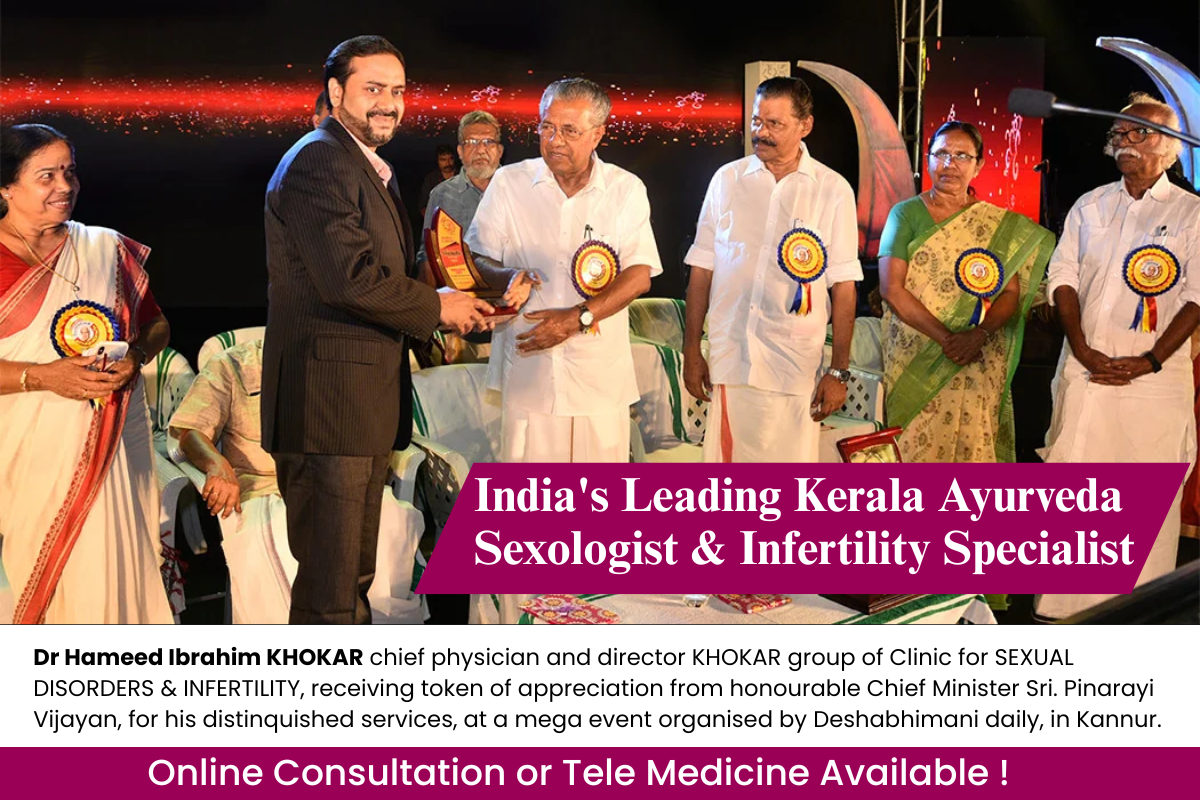
Chief Physician & Medical Director – Khokar Group of Clinics
Dr. Hameed Ibrahim Khokar, BAMS, DNHE, FRAS (London)
Specialist in Infertility, Sexual Health & Reproductive Disorders
Registered under the Travancore-Cochin Medical Practitioners Act, 1953 (Reg. No. 9257)
Frequently Asked Questions
Can online consultation help couples facing infertility?
Can Ayurvedic treatment support both male and female fertility?
What tests are useful before consultation?
How long does fertility treatment usually take?
The duration varies depending on the underlying causes and individual health conditions. Some couples may notice improvement within months, while others may require longer support.