Kannur has a distinct demographic profile — a mix of expatriate-return families, high educational background, sedentary work culture, and rising metabolic disorders. Increasing cases of male infertility, erectile instability, delayed conception, PCOS, and recurrent pregnancy loss are now being reported even in younger couples.
Access to specialized reproductive evaluation is not always locally available. Through structured online consultation, individuals and couples in Kannur can receive systematic assessment and personalized treatment planning without compromising privacy.
Emerging Reproductive Health Trends in North Kerala
In Kannur, we frequently observe:
- Rising diabetes and insulin resistance affecting sperm and ovulation
- Gulf-return stress and disrupted sleep cycles
- Increased screen-time and sedentary lifestyle
- Delayed marriage and late conception planning
- Hormonal imbalance in working women
- Psychological performance anxiety in young males
These factors influence both gamete quality and hormonal synchronization.
Comprehensive Evaluation Framework
Before initiating treatment, we review:
- Semen analysis (including morphology grading)
- Hormone profile (FSH, LH, Testosterone, Prolactin, TSH, AMH when required)
- Ultrasound pelvis or scrotal Doppler
- Metabolic indicators (HbA1c, Lipid profile)
- Previous fertility treatment history
This prevents superficial prescribing and ensures root-cause targeting.
Conditions Managed
Male Conditions
- Erectile dysfunction
- Premature ejaculation
- Low libido
- Weak erection stability
- Performance anxiety
- Nightfall / hypersensitivity
- Azoospermia (comprehensive evaluation required)
- Low sperm count
- Poor motility
- Abnormal morphology
- Varicocele-related infertility
- Testicular functional weakness
Female Conditions
- Low libido
- Vaginal dryness
- PCOS-related infertility
- Hormonal imbalance
- Poor ovulation
- Thin uterine lining
- Irregular cycles
- Recurrent miscarriage
- Stress-induced fertility suppression
- Comprehensive female infertility management
Clinical Case Insight – Azoospermia Evaluation
A 37-year-old male from Kannur consulted after being advised immediate surgical sperm retrieval elsewhere. He had been married for 5 years.
Initial Findings
- Semen analysis: Azoospermia (two reports)
- FSH: 14.8 mIU/ml
- Testicular volume: 14 cc bilaterally
- Testosterone: Within normal range
- No genetic evaluation done previously
Clinical Interpretation
The pattern suggested:
- Possible non-obstructive spermatogenic compromise
- Borderline elevated FSH indicating testicular stress
- No prior attempt at metabolic or oxidative correction
Before any invasive procedure, structured hormonal and spermatogenic support was initiated after full evaluation.
Treatment Direction
- Shukra dhatu strengthening protocol
- Microcirculatory enhancement
- Oxidative stress modulation
- Lifestyle correction including sleep rhythm stabilization
- Nutritional correction
Monitoring Over 6 Months
- FSH reduced to 10.9
- Repeat semen analysis showed rare sperm presence
- Third analysis demonstrated 2–3 million/ml count
This allowed the couple to consider less invasive reproductive options.
(Case anonymized. Each azoospermia case requires individual evaluation.)
Ayurvedic Understanding
Male Reproductive Dysfunction
Assessment includes:
- Quality of shukra dhatu
- Vata disturbance affecting erection and ejaculation
- Pitta-related sperm damage
- Kapha-mediated stagnation
Treatment aims to support spermatogenic cycle health, endocrine balance, and vascular integrity.
Female Reproductive Disorders
Evaluation focuses on:
- Artava quality
- Endometrial nourishment
- Hormonal rhythm
- Stress-mediated cycle disruption
Treatment is aligned with menstrual phases for optimal receptivity.
How Online Consultation Works
- Share medical reports and history
- Structured reproductive assessment
- Personalized prescription
- Diet & lifestyle correction guidance
- Scheduled monitoring every 4–6 weeks
Confidentiality is strictly maintained.
Delivery Across Kannur
- Discreet packaging
- Reliable courier service
- Coverage across urban and rural areas
- Ongoing dosage support
Support & Follow-Up
- Periodic lab review guidance
- Treatment refinement
- Conception planning support
- Response monitoring
Why Choose This Consultation
- MD Ayurveda Sexologist specializing in infertility & sexual health
- 150+ years Kerala Ayurveda legacy
- Trusted by patients in 40+ countries
- Integration of Ayurveda with reproductive science
- Tailor-made herbal formulations
- Private & confidential online consultation
- Discreet medicine delivery
- Local courier support
Chief Physician & Medical Director – Khokar Group of Clinics
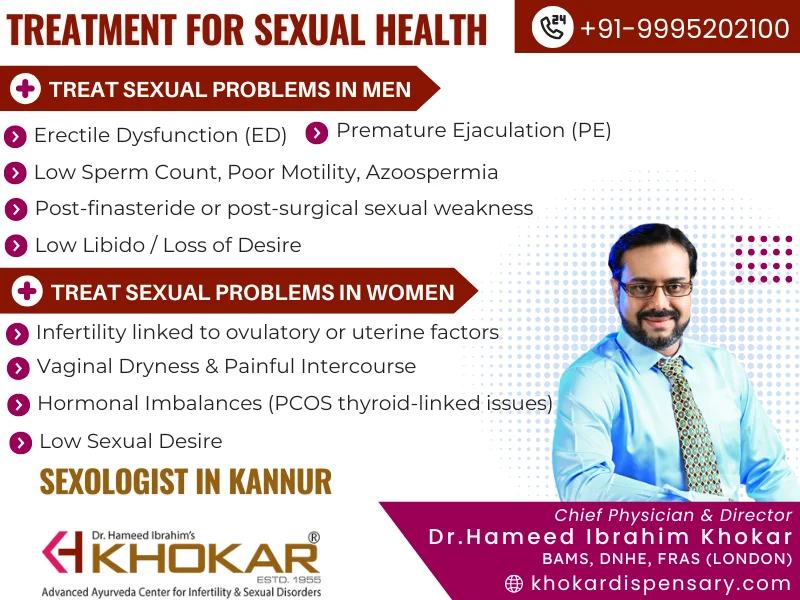
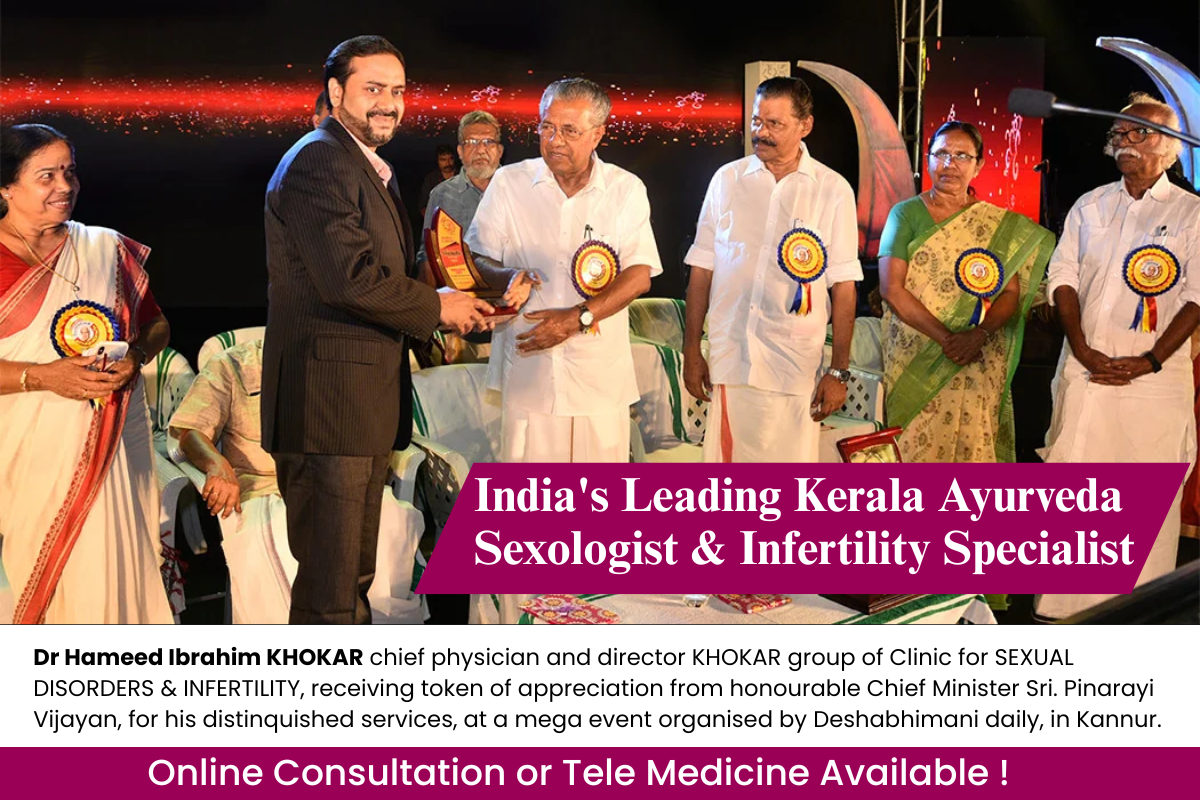
Dr. Hameed Ibrahim Khokar, BAMS, DNHE, FRAS (London)
Registered under the Travancore-Cochin Medical Practitioners Act, 1953 (Reg. No. 9257)
Benefits of Online Consultation
- Avoid long-distance travel
- Access to specialized infertility expertise
- Structured evaluation before treatment
- Privacy and convenience
- Long-term reproductive strengthening strategy
If you are in Kannur and seeking confidential, structured reproductive care without unnecessary procedures, online consultation offers a systematic and privacy-focused approach.