
What Is Infertility?
Infertility refers to difficulty achieving pregnancy after a period of regular, unprotected intercourse. It may involve female factors, male factors, or a combination of both, and in many couples, it arises from subtle metabolic, hormonal, or lifestyle-related disturbances rather than one single cause.
Common Contributors Across Both Partners:
- Hormonal imbalances
- Disturbed ovulation or spermatogenesis
- Inflammation affecting reproductive tissues
- Metabolic issues such as insulin resistance
- Stress, irregular sleep, and emotional strain
- Nutritional deficiencies
- Sexual dysfunction
- Age-related decline in reproductive vitality
Infertility is best addressed through a holistic assessment that examines both partners and evaluates reproductive, metabolic, and emotional health.
Ayurvedic Perspective on Infertility
Ayurveda views fertility as an expression of overall well-being, where healthy tissues, balanced doshas, strong Agni (digestion/metabolism), and clear srotas (channels) are essential.
Key Ayurvedic Principles Relevant to Infertility:
- Shukra & Artava Dhatu Health
These reproductive tissues must be well-nourished for healthy sperm, ovulation, and uterine receptivity.
- Dosha Harmony
- Vata governs movement—sperm transport, ovulation, implantation.
- Pitta influences hormones and metabolism.
- Kapha supports tissue building and reproductive nourishment.
Imbalance in any of these disrupts fertility.
- Agni (Metabolic Fire)
Weak Agni leads to poor nutrient assimilation, affecting egg and sperm quality.
- Srotorodha (Channel Obstruction)
Obstructions in reproductive pathways—either inflammatory or metabolic—interfere with conception.
Ayurvedic Samprapti (Pathogenesis)
- Faulty digestion or stress disturbs dosha balance
- Impaired Dhatu nourishment occurs
- Hormonal and cycle rhythms weaken
- Reproductive tissues lose vitality
- Conception becomes difficult
This model allows Ayurveda to address not just infertility but the entire terrain that supports conception.
Our Ayurvedic Treatment Approach for Infertility
Infertility management is tailored to each couple, focusing on root-cause correction rather than only symptom management.
Evaluation Includes:
- Menstrual cycle analysis
- Semen assessment
- Hormonal review
- Ultrasound findings
- Metabolic markers
- Lifestyle and emotional health
- Prakriti–Vikriti mapping
Core Components of Treatment
 Cycle-Specific Female Protocols
- Follicular support for egg development
- Ovulation support
- Luteal enhancement for implantation
- Endometrial nourishment
Male Fertility Support
- Shukra Dhatu rejuvenation
- Stress and metabolic correction
- Improvement in sperm count, motility, and morphology
Classical Herbal Formulations
Selected from categories such as:
- Ovulation-supportive herbs
- Shukra-boosting Rasayanas
- Anti-inflammatory uterine tonics
- Metabolic-balancing herbs
- Nervous system stabilisers
Panchakarma (When Appropriate)
Used for:
- High inflammation
- Chronic metabolic issues
- Long-standing hormonal imbalance
- Deep-seated Vata or Kapha disturbances
Detoxification is personalised; it is not routinely required for all infertility cases.
Rasayana Therapy
Rejuvenative therapies improve cellular vitality, reproductive function, and hormonal resilience.
Follow-Up Timeline
Progress is typically reviewed every 8–12 weeks, aligned with sperm regeneration cycles and menstrual cycle improvements.
All medicines are authentic Kerala Ayurveda formulations, prepared without steroids, hormones, or harmful chemicals.
Lifestyle, Diet & Mind–Body Support
Diet Recommendations
Supportive:
- Warm, freshly prepared meals
- Whole grains, vegetables, healthy fats
- Milk preparations, nuts, seeds (when appropriate)
- Nutrient-dense fruits
- Iron and antioxidant-rich foods
Reduce:
- Very processed foods
- Irregular eating patterns
- Excessive heat-producing foods
- Late-night meals
- Stimulant overuse
Lifestyle Recommendations
- Regulate sleep cycles
- Moderate daily exercise
- Mind–body techniques for stress reduction
- Sexual habits aligned with natural fertile periods
- Reduced exposure to toxins and heat
- Emotional support for both partners
These practices improve reproductive rhythm, hormonal balance, and overall vitality.
Why Patients Trust Our Clinic for Infertility Treatment
- Expert care by an MD Ayurveda Sexologist specialising in reproductive health.
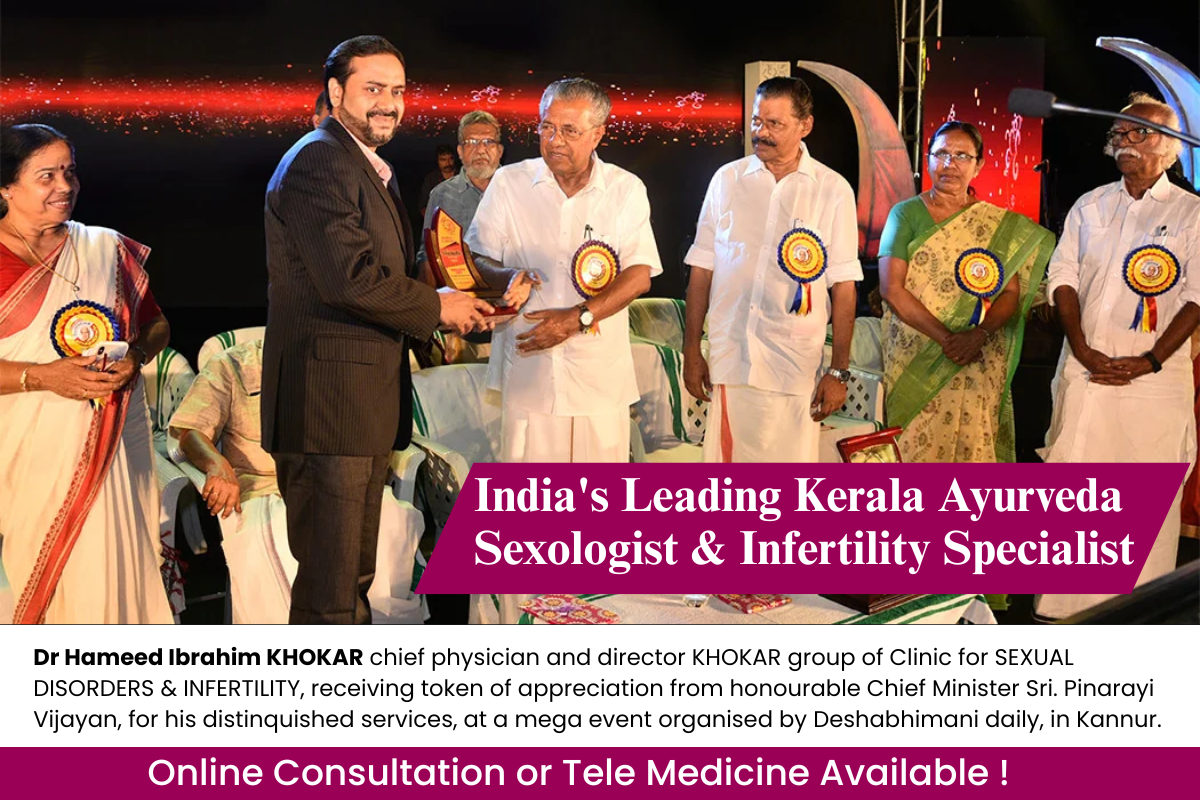
- Led by Dr. Hameed Ibrahim Khokar, an Ayurvedic physician from a 150-year medical lineage
- Patients from 40+ countries seek guidance for complex infertility challenges.
- Integration of classical Ayurveda with modern reproductive science.
- Authentic herbal formulations free from steroids, hormones, or chemicals.
- Treatment focuses on long-term systemic correction for natural conception.
Case Example
A couple in their early 30s presented with 2 years of unexplained infertility.
- Male partner: borderline motility, high stress
- Female partner: slightly irregular cycles, mild luteal weakness
Ayurvedic Assessment
- Both partners showed Vata aggravation
- Metabolic sluggishness in the female partner
- Stress-induced hormonal fluctuations
- Suboptimal nourishment of reproductive tissues
Treatment Approach
- Cycle-specific female protocol
- Shukra Dhatu-enhancing herbs for the male partner
- Rasayana support for both
- Lifestyle grounding practices
- Digestive/metabolic correction
- Stress reduction through structured routines
Outcome
After 4 months, cycle regularity improved and semen motility increased. The couple reported improved energy, better sleep, and restored emotional balance—key foundations for natural conception.
Disclaimer
The information provided on this page is for educational purposes and does not replace a personalised medical consultation. Ayurveda treatments are planned only after evaluating an individual’s health status, clinical history and specific imbalances. Results vary from person to person. For accurate diagnosis and appropriate treatment, please consult a qualified healthcare professional.