


What Are Menstrual Problems That Lead to Infertility?
Menstrual disturbances can disrupt ovulation and hormonal rhythm, directly impacting fertility.
Common menstrual problems linked with infertility include:
- Irregular periods (delayed or early cycles)
- Anovulatory cycles
- Short cycles (luteal phase defect)
- Very long cycles (40+ days)
- Painful periods (dysmenorrhea)
- Heavy periods (menorrhagia)
- Very light or scanty periods
- Spotting before periods
- Absence of periods (amenorrhea)
These issues reflect disturbances in hormonal balance, ovarian function, endometrial health, and reproductive metabolism.
Left untreated, they reduce the chances of natural conception.
Symptoms of Menstrual Disorders Associated With Infertility
- Unpredictable cycle lengths
- No signs of ovulation
- Painful periods affecting quality of life
- Premenstrual spotting
- Acne or hair fall (hormonal imbalance)
- Mood changes
- Short cycles (< 24 days)
- Long cycles (> 35 days)
- Very light or absent bleeding
Causes & Risk Factors
- Hormonal imbalance (LH, FSH, prolactin fluctuations)
- Thyroid dysfunction
- PCOD / anovulation
- Endometriosis
- Low ovarian reserve
- High stress / emotional strain
- Poor nutrition
- Obesity or very low BMI
- Excessive physical activity
- Sleep disturbance
- Post-illness cycle disturbances
- Chronic inflammation
- Insulin resistance
Diagnosis
- Day 2–5 hormonal evaluation (FSH, LH, E2)
- Thyroid profile (TSH, T3, T4)
- AMH test
- Ultrasound for follicular development
- Ovulation tracking
- Endometrial thickness assessment
- Prolactin evaluation
- Glucose/insulin tests
Ayurvedic Perspective (Nidana, Dosha, Samprapti)
Ayurveda categorizes menstrual disorders under Artava Vyapad and sees them as imbalances in Vata, Pitta, and Kapha, affecting:
- Ovulation
- Hormonal rhythms
- Endometrial nourishment
- Cycle length
- Fertility potential
Nidana (Root Causes)
- Vata aggravation → delayed cycles, spasmodic pain
- Pitta aggravation → heavy bleeding, clotting, inflammation
- Kapha aggravation → anovulation, sluggish cycles
- Weak Agni → poor formation of Rasa & Rakta dhatus
- Stress → HPO axis disruption
- Improper diet / lifestyle
Samprapti (Pathogenesis)
- Agni dysfunction → defective Rasa-Rakta dhatu formation
- Vata imbalance → irregular cycles, implantation problems
- Pitta provocation → spotting, inflammation
- Kapha blockage → anovulation, thickened endometrium
- Artavavaha Srotas disturbance → infertility manifestations
Srotas & Dhatus Involved
- Artavavaha Srotas – menstrual flow & ovulation pathway
- Rasa / Rakta Dhatu – endometrial nourishment
- Artava Dhatu – ovum quality
- Majja / Ojas – reproductive stability
Ayurvedic Treatment Approach
(Safe, classical, personalised, no rasa-aushadhi)
The goal is to restore ovulation, regulate cycle length, improve endometrial quality, and strengthen fertility physiology.
Classical Formulations for Cycle Correction
(Under physician supervision only)
- Phala Ghrita – supports ovulation & luteal phase
- Shatavari Ghrita – nourishes Artava dhatu
- Dashamoola Kashayam – regulates Vata imbalance (irregular cycles)
- Ashokarishtam – supports Pitta balance & cycle rhythm
- Punarnava Mandura – improves Rasa-Rakta quality
- Jeerakadyarishtam – digestive & hormonal support post-partum or weak Agni
Herbal Support (Cycle-Specific Approach)
For Irregular Cycles
- Shatavari
- Ashoka
- Lodhra
- Yashtimadhu
For Anovulation
- Shatavari
- Kapikacchu (mild dose)
- Vidari
- Ashwagandha
For Short Cycles (Luteal Phase Defect)
- Ashwagandha
- Shatavari Ghrita
- Lodhra
For Scanty Bleeding
- Yashtimadhu
- Shatavari
- Punarnava
For Painful Periods
- Dashamoola
- Bala-based oils (external application)
- Gentle heat therapy
Phase-Wise Ayurvedic Fertility Protocol
Follicular Phase (Day 2–14)
Goal → Improve follicle quality & ovulation.
- Shatavari, Lodhra
- Light to moderate ghrita-based Rasayana
- Warm meals with ghee
- Gentle yoga for pelvic circulation
Luteal Phase (Day 15–28)
Goal → Strengthen implantation physiology.
- Ashwagandha
- Phala Ghrita
- Warm, grounding diet
- Reduce stress, avoid heavy exercise
External Therapies
- Abhyanga with sesame or Bala-Ashwagandha oil
- Nadi Swedana for pelvic stiffness (avoid abdomen during periods)
- Shirodhara for stress-related cycle disruption
These help regulate Vata and promote cycle regularity.
Panchakarma (Fertility Preparation Only)
Performed only after evaluation:
- Virechana → Pitta balance & hormonal correction
- Basti Therapy (Yapana / Matra) → Vata correction for ovulation & implantation
- Rasayana Phase → improves oocyte quality + endometrium
No invasive procedures like Uttara Basti are recommended unless strictly indicated.
Diet for Menstrual Problems Affecting Fertility
Recommended
- Warm, cooked meals
- Cow ghee (small amounts)
- Almonds, walnuts, dates
- Moong dal, red rice
- Steamed vegetables
- Saffron (if Pitta not high)
Avoid
- Cold foods
- Excessive caffeine
- Refined sugar
- Junk food
- Late-night eating
- Fasting or irregular meals
Lifestyle
- Sleep by 10:30 pm
- Reduce screen time at night
- 30–40 minutes of walking
- Yoga:
- Baddha Konasana
- Supta Virasana
- Cat–Cow
- Viparita Karani
- Deep breathing (Nadi Shodhana, Ujjayi)
- Avoid excessive exercise
- Emotional wellness practices
Why Patients Trust Our Clinic
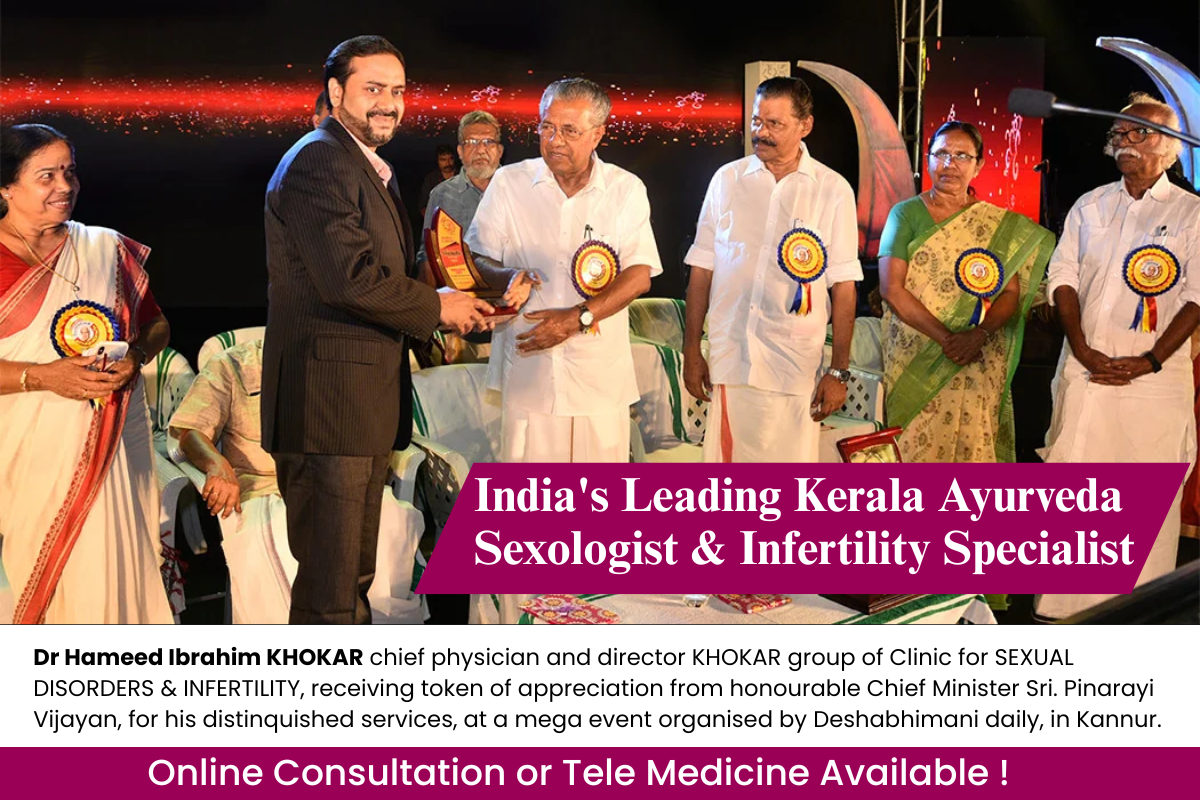
- Led by Hameed Ibrahim Khokar, a fourth-generation Ayurvedic physician continuing a 150-year family medical tradition.
- Patients from 40+ countries receiving personalised fertility care
- A reported 93% satisfaction rate through consistent clinical results
- Authentic Ayurvedic medicines delivered to 40+ countries with worldwide home shipping
- Treatments rooted in traditional Kerala Ayurveda for hormonal and reproductive balance
- Supported by a strong network of 15+ branches across India
Case Example
A 29-year-old woman with irregular cycles (35–50 days), spotting, and anovulation.
Ayurvedic Plan
- Shatavari + Lodhra during follicular phase
- Phala Ghrita during luteal phase
- Virechana (one cycle)
- Yapana Basti for Vata balancing
- Anti-inflammatory diet
- Shirodhara for stress reduction
Outcome
- Cycles regulated to 30–32 days
- Confirmed ovulation on ultrasound
- Conception achieved naturally within 6 months
(Results vary; integrated care recommended.)
Medical & Safety Disclaimer
Ayurvedic treatment supports cycle regularity, ovulation, and reproductive health, but does not replace medical diagnosis or fertility evaluation.
All herbal and classical formulations should be taken only under supervision of a qualified physician.